The fluorescent lights of the maternity ward always hum with a low, electric buzz, a sound you don’t notice until everything else goes silent. It is a sound that smells of antiseptic and floor wax, a frequency that burrows into your molars. Eighteen years ago, that silence fell heavy and cold when the doctor, a kind man with tired eyes and a name tag that read Dr. Aris, delivered the news that would fracture my life into “Before” and “After.”
“Mr. and Mrs. Vance,” he said softly, looking first at me, then at my wife, Lauren. “We have completed the assessments. It appears that both of your daughters have a condition known as Leber congenital amaurosis. It’s rare, but… both of your daughters have congenital blindness.”
The words hung in the air like smoke. I remember looking at them—Emma and Clara—two tiny, wriggling bundles in standard-issue pink hospital blankets. They were yawning, their tiny fists clenching and unclenching against the air. I didn’t see brokenness. I saw my daughters. I saw the curve of my grandmother’s chin in Emma. I saw the length of my own fingers in Clara.
My wife, Lauren, saw a prison sentence.
She didn’t scream. She didn’t cry. She just stared at them with a look of detached horror, as if she were looking at a defective product she couldn’t return to the store. Lauren was beautiful, ambitious, and convinced that her life was destined for magazine covers, red carpets, and the adoration of strangers. She had planned this motherhood down to the outfits they would wear for the paparazzi she imagined would follow us. Diapers, night feedings, and special needs appointments were not in the script.
“They can’t see me?” she whispered, her voice trembling not with sadness, but with a strange, narcissistic panic. “They’ll never look at me?”
“No, Mrs. Vance,” the doctor said gently. “But they will know you. They will know your scent, your voice, your touch.”
Lauren pulled her hand away from the bassinet as if it were hot. “That’s not the same.”
Three weeks later, I woke up to a silence in the apartment that felt permanent. It was 3:00 AM. The twins were asleep for the first time in four hours. I reached across the bed, seeking the warmth of my wife’s back, but my hand met only cool sheets.
I sat up. The bathroom light was off. The closet door was open.
I walked to the kitchen, my bare feet sticking slightly to the linoleum. On the counter, next to a stack of unpaid bills and a half-empty bottle of formula, was a note written on the back of a utility envelope.
“I can’t do this. I have dreams. I’m sorry.”
That was it. No tear stains. No phone number. No forwarding address. Just a woman choosing herself over two helpless babies who needed their mother. She had taken the car, the savings account, and her jewelry. She left the babies.
Chapter I: Building a World in the Dark
The first few years were a blur of sleepless nights, formula stains, and a constant, gnawing panic that sat in my gut like a stone. I was a 24-year-old construction worker trying to raise two blind infants alone in a city that doesn’t slow down for anyone.
I had to quit the foreman job; the hours were too long. I took odd jobs—fixing sinks, painting fences, doing overnight security shifts—anything that allowed me to be home when the girls were awake. We moved from our two-bedroom apartment to a smaller, cramped walk-up in Queens because the rent was cheaper.
I read every book I could find on visual impairment. I learned Braille before they could talk, my rough, calloused fingers struggling to distinguish the tiny raised dots. I padded every sharp corner in the apartment with foam and duct tape until the place looked like the inside of a padded cell.
But survival wasn’t enough. I wanted them to thrive. I wanted them to know the world, not just fear it.
I learned that for Emma and Clara, the world wasn’t darkness; it was a symphony of sound and texture.
“Listen,” I would whisper to them, sitting on the fire escape as the city roared below us. “That low rumble? That’s the Number 7 train. That high screech? That’s a taxi braking. That smell? That’s Mr. Henderson’s bakery three blocks away making garlic knots.”
They learned to map the world through echoes and scents. By age four, Clara could tell who was walking up the stairs just by the rhythm of their footsteps. Emma could identify any fabric just by brushing it against her cheek.
“It’s velvet, Daddy,” she’d giggle. “It feels like a cat’s tongue but softer.”
But there were hard days. Days when other kids at the playground would stare or make fun of their canes. Days when I would find Clara crying in her room because she couldn’t watch the cartoons her friends talked about.
“Why did Mommy leave?” Emma asked me once, when she was six. We were eating macaroni and cheese at the small kitchen table.
I froze. I had dreaded this question. I looked at her sweet face, her eyes looking past me, waiting for a truth I couldn’t give her. I couldn’t tell her that her mother saw her as a burden. I couldn’t tell her that her mother chose vanity over love.
“Mommy had to go away to work,” I lied, my voice thick. “She… she wasn’t ready to be a mommy. It wasn’t your fault. It was never your fault.”
“Did she leave because we can’t see?” Clara asked, her voice small.
“No!” I said, reaching out to hold both their hands. “No. She left because she was blind. She couldn’t see how wonderful you are.”
Chapter II: The Thread That Binds
When the girls were five, money was tight. Winter was coming, and they needed coats. I couldn’t afford the store-bought ones, so I went to a thrift store, bought two oversized wool coats for grown women, and brought them home.
I dusted off my grandmother’s old sewing machine—a heavy, black cast-iron beast that had been sitting in the closet. I didn’t know how to sew, but I knew how to build things. Clothing is just construction with softer materials.
The girls were fascinated by the machine. The rhythmic thump-thump-thump of the needle, the whir of the wheel, the smell of machine oil and old wool.
“Can I touch it?” Emma asked.
“Carefully,” I said.
I guided their hands. I showed them the danger zones—the needle, the belt. And then, I showed them the magic.
It started as a way to keep their hands busy, to help them develop fine motor skills and spatial awareness. But it became our language.
I taught them to sew not with their eyes, but with their hands.
“Feel the grain, Emma,” I’d say, guiding her small fingers over denim. “Feel how it runs up and down? That’s the spine of the fabric. If you cut against it, it stretches. If you cut with it, it holds.”
Clara had a mind for structure. She was the architect. “Dad,” she’d say, her hands moving in the air, sculpting invisible shapes, “if I pleat this here, at the waist, it will fall like a waterfall, right? It will make a swishing sound when I walk?”
“Exactly,” I’d tell her.
Our living room transformed. The TV was sold to buy fabric. The coffee table became a cutting board. Spools of thread lived on the windowsill like colorful soldiers, arranged by texture rather than color. We developed a system—knots in the thread spools to indicate color. One knot for black, two for white, three for red.
They learned to thread a needle with their tongues and their fingertips. They learned to feel the vibration of the machine to know the speed. They learned to hear the difference between a sharp pair of scissors and a dull one.
By the time they were twelve, they were making their own clothes. By fifteen, they were making clothes for the neighbors.
We built a world where blindness wasn’t a deficit; it was just a different way of seeing. They didn’t need mirrors to know they looked good; they could feel the fit, the drape, the elegance of the cut.
They grew up fierce. They navigated the subway with canes and confidence. They made friends who saw past their disability. They laughed loud and dreamed big.
And they never asked about her. Not after that one day in the kitchen. I made sure her absence was a fact, not a wound.

Chapter III: The Return of the Ghost
Last Thursday started like any other. The apartment smelled of steam iron and fresh coffee. The girls, now eighteen, were working on a major commission—a prom dress for the daughter of the local baker. It was an intricate piece, silk chiffon with hand-beaded lace.
Emma was at the machine, her fingers guiding the delicate fabric with terrifying precision. Clara was at the dress form, pinning lace appliqués by touch, her fingers reading the pattern like Braille.
“Dad,” Clara said, “we need more of the invisible thread. The hem is too heavy.”
“I’ll run to the shop later,” I said, sipping my coffee, leaning against the counter, watching them with a pride that made my chest ache.
Then, the doorbell rang.
It wasn’t the buzz of the downstairs intercom. It was a sharp, impatient rapping on our apartment door.
I wasn’t expecting anyone. The landlord had already come for the rent.
I walked to the door, wiping my hands on a rag. I unlocked the deadbolt and pulled it open.
The air left my lungs.
Lauren stood there.
But not the Lauren I knew. The Lauren I knew wore sweatpants and looked tired. This Lauren was polished, expensive, and terrifyingly preserved. She looked like she had walked out of a high-definition screen. Her hair was a shade of blonde that cost hundreds to maintain. Her suit was tailored white linen—impractical for Queens, perfect for the Hamptons. She wore oversized sunglasses on a cloudy day.
She lowered them slowly, her eyes sweeping over me with familiar disdain. She looked at my graying beard, my flannel shirt, the calluses on my hands.
“Mark,” she said. Her voice hadn’t changed. It was still sharp, like glass cutting through water.
I blocked the doorway, my hand gripping the frame so hard my knuckles turned white. “What do you want?”
“To see my daughters,” she said, attempting to push past me.
I didn’t move. “You don’t have daughters. You have a career. Remember?”
“Don’t be dramatic,” she sighed, ducking under my arm and stepping into the hallway.
She walked into our home like she was inspecting a property she intended to condemn. Her nose wrinkled at the smell of fabric glue and coffee. She looked at the peeling paint in the corner, the worn rug, the sheer chaos of fabric bolts stacked against the wall.
“You’ve remained the same,” she said, loud enough for the girls to hear. “Still living in this… hole? You were supposed to be a man, Mark. You were supposed to build an empire. Instead, you built a sweatshop.”
Emma and Clara froze at their table. The sewing machine stopped its hum. They couldn’t see her, but they could hear the venom. They knew that voice. It was the voice from the videos I had refused to show them, the voice of the woman who had left.
“Who’s there, Dad?” Clara asked, her voice steady, though I saw her hand tremble slightly over the pincushion.
I turned to face them. “It’s your mother,” I said. The words tasted like ash.
Lauren walked toward them, her heels clicking on the hardwood—a sound of intrusion, sharp and staccato.
“Girls!” she exclaimed, her voice shifting instantly into a performative, syrupy register. It was the voice of a TV mom, fake and polished. “Look at you. You’re so grown up. My God, you’re beautiful.”
She reached out to touch Emma’s hair. Emma flinched, pulling her head back as if a wasp were buzzing near her ear.
Emma didn’t turn her head toward the sound. She kept her face forward, neutral. “We can’t see, remember? We’re blind. Isn’t that why you left?”
The bluntness of it hit Lauren like a physical slap. She faltered, her hand hovering in the air. “Of course I remember. I meant… you’ve grown so much. I’ve thought about you every single day.”
“Funny,” Clara said, picking up a pair of shears and testing the weight of them. “We haven’t thought about you at all.”
I had never been prouder of my daughters than in that moment.
Chapter IV: The Indecent Proposal
Lauren cleared her throat, smoothing her expensive linen jacket. She was clearly rattled by their immunity to her charm. She wasn’t used to rejection; she was used to fans, to employees, to people who wanted something from her.
“I came back for a reason,” she said, regaining her composure. “I have something for you.”
She walked back to the door where she had left two heavy garment bags and a sleek leather briefcase. She dragged them into the center of the room. She unzipped the bags with a flourish.
“These are designer gowns,” she announced, the fabric rustling. “From Paris. Silk, taffeta, hand-stitched. Worth five thousand each. I thought you might want to feel what real quality is like.”
The insult was subtle, but it landed. She was telling them their work was inferior.
Then, she opened the briefcase and slapped a thick, manila envelope on the coffee table. The sound was heavy.
“And this,” she gestured to the envelope, “is fifty thousand dollars. Cash. Tax-free.”
The girls held hands under the table. I saw Emma squeeze Clara’s fingers.
“Why?” I asked, stepping closer to her, placing myself between her and the girls. “Why now? After eighteen years of radio silence? You missed their first steps. You missed the surgeries. You missed the graduations. Why today?”
Lauren smiled, and for a second, I saw the woman I used to love. But the expression twisted into something predatory.
“Because I want my daughters back,” she said. “I want to give them the life they deserve. I’m successful now, Mark. I have a brand. I have a lifestyle blog. I have a reputation.”
She paused, looking at the girls with a hunger that wasn’t maternal.
“But there is a condition.”
The air in the room grew heavy, thick with tension.
“What condition?” Emma asked, her voice low.
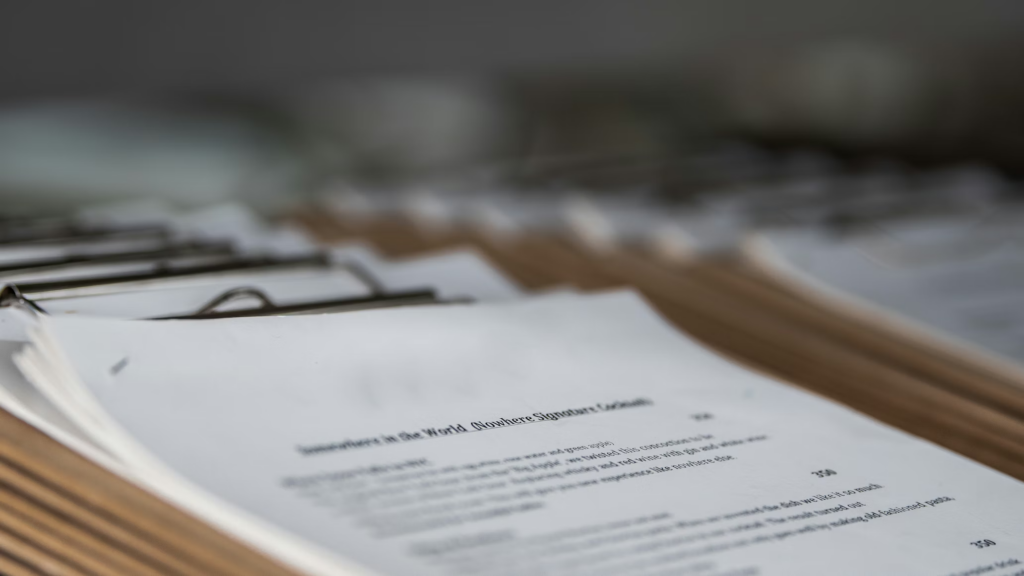
Lauren pulled a document from her purse. It was stapled, legal-sized, on thick bond paper.
“It’s simple,” Lauren said, smoothing the paper. “You can have the money. You can have the gowns. You can come live with me in my estate in Connecticut. You’ll have servants. You’ll have the best doctors.”
She took a breath.
“But you have to choose me. You have to sign this statement.”
She held the paper out, though they couldn’t see it.
“What does it say?” I asked, snatching it from her hand.
I read the first paragraph, and my blood ran cold. It was a press release.
“We, Emma and Clara Vance, acknowledge that our father, Mark Vance, was ill-equipped to raise special needs children. We affirm that he kept us in poverty and isolation, holding us back from our potential. We are grateful to be reunited with our mother, Lauren, who has returned to rescue us and provide the care we have always needed.”
My hands curled into fists, crumpling the edges of the paper. “You want them to denounce me? You want them to lie?”
“I want them to tell the truth,” she snapped, her mask slipping. “Look at this place! It’s a sweatshop. You’ve made them into little seamstresses. I’m offering them a future. I’m offering them a platform.”
“You’re offering them a script,” I spat. “Because your numbers are down? Is that it? You need a redemption arc? ‘The Prodigal Mother Returns’?”
Lauren ignored me. She turned to the girls. “Fifty thousand dollars, girls. Imagine what you could do. You could start a real business. You wouldn’t have to struggle like him.”
Emma stood up slowly. She navigated around the sewing table, her hand trailing along the edge for orientation. She walked toward the coffee table. Her hand found the envelope. She weighed it in her palm.
“This is a lot of money,” she said softly.
“Emma…” I started, my heart cracking. I wouldn’t blame her. It was life-changing money. Maybe I had held them back. Maybe my pride was standing in the way of their comfort.
“Let me finish, Dad.” She turned her sightless eyes toward where she heard Lauren’s breathing. “This is more money than we’ve ever seen.”
Lauren beamed, triumphant. “Smart girl. You’re pragmatic. Like me.”
“But you know what?” Emma continued, her voice hardening. “We’ve never needed it. We have a father who stayed. Who worked double shifts so we could have braille readers. Who learned to sew so he could teach us. Who taught us that we aren’t broken toys to be discarded.”
Clara stood up too, moving to stand shoulder-to-shoulder with her sister. “We don’t want your money. We don’t want your gowns. We can make better ones ourselves. And we definitely don’t want you.”
“You left us,” Emma said, her voice shaking now. “You left two blind babies because you were scared. You’re weak. Dad is strong. Dad is everything you aren’t.”
Emma ripped the envelope open. With a violent thrust, she threw the cash into the air.
It was a moment of pure cinema. The bills fluttered down like green snow, spinning in the draft from the window, landing on Lauren’s expensive linen suit, on her designer shoes, on the dirty floor she despised.
“Get out,” Emma said.
Lauren’s face twisted into a mask of pure, unfiltered rage. The beautiful, polished woman dissolved, revealing the ugly, selfish creature beneath.
“You ungrateful little… freaks!” she screamed. “Do you know who I am? I’m famous! I did this for you! I lowered myself to come back here!”
“You did it for yourself,” I said, stepping forward, my voice low and dangerous. “You need a story. Well, you got one. Just not the one you wanted.”
“You’ll regret this!” she shrieked, scrambling to gather the cash from the floor, her dignity completely gone. She was on her hands and knees, stuffing bills into her purse, looking pathetic. “You’ll rot in this tenement!”
“No,” I said, opening the door. “We won’t. But you’ll die alone in your mansion. And that’s a poverty money can’t fix.”
She stormed out, clutching her bag, slamming the door so hard the thread spools rattled on the windowsill.
Chapter V: The Viral Twist
The room was silent for a long moment. Then, Clara let out a shaky breath.
“Is she gone?”
“She’s gone,” I said, pulling them both into a hug. “She’s really gone.”
But the story didn’t end there.
“Um, guys?”
We all turned. Sitting in the corner of the room, on a stool behind a dress form, was Sophie. Emma’s best friend from the community center. She had been there the whole time, quiet as a mouse.
She was holding up her phone. Her eyes were wide.
“I… I was live streaming,” Sophie said. “We were going to do a unboxing of the new fabric, remember? I never turned it off.”
I stared at her. “You recorded that?”
“Everything,” Sophie said. “There are… there are fifty thousand people watching right now. The comments are going insane.”
We looked at the screen. The chat was a blur of speed.
“Did she just try to buy her kids?” “That Dad is a hero.” “Wait, is that Lauren Vance? The influencer? #Cancelled.” “Those girls are queens.”
The video went viral overnight. It was shared on TikTok, Twitter, YouTube. The title was simple: “Famous Mom Tries To Buy Abandoned Blind Daughters, Gets Destroyed.”
The world saw Lauren for who she was. The sponsors she bragged about? They dropped her within 48 hours. Her book deal? Suspended. Her “brand” evaporated like mist in the sun. She became a pariah.
But more importantly, the world saw my daughters.
They saw the workshop. They saw the designs in the background. They saw the dignity and the talent.
Emails started pouring in. Not hate mail—orders. Commissions.
Three days later, the phone rang. It was a number from Los Angeles.
“Mr. Vance?” a woman’s voice asked. “My name is Sarah Burton. I’m the head costumer for The Gilded Age. I saw the video. I don’t care about the drama, but I saw the dress on the mannequin behind your daughter. Did they make that?”
“Yes,” I said, my heart hammering. “They did.”
“It’s exquisite,” she said. “The tactile detailing is unlike anything I’ve seen. We have an internship program. Full scholarship. Housing included. We’d like to offer it to both of them.”

Chapter VI: The Test
We flew to Los Angeles two weeks later. It was the girls’ first time on a plane. I described the clouds to them, the feeling of takeoff, the way the world got smaller below us.
The studio was a warehouse of dreams. Racks of costumes stretched for miles.
Sarah Burton met us. She was a no-nonsense woman with a tape measure around her neck.
“I need to know they can do the work,” she said. “Not just the design, but the grunt work. The alterations. The fixes under pressure.”
She led us to a workstation. She handed Emma a velvet gown with a ripped hem. “Five minutes. Invisible stitch.”
She handed Clara a corset with a broken boning channel. “Ten minutes. Fix the structure without altering the silhouette.”
I stood back, holding my breath.
The girls didn’t panic. They touched the fabric. They found their tools. Their hands moved with the muscle memory of a thousand nights in our Queens apartment.
Emma finished in three minutes. Clara finished in seven.
Sarah inspected the work. She ran her fingers over the stitches. She looked at me, then at the girls.
“I’ve seen sighted tailors with thirty years of experience who can’t do this,” she said. “You’re hired.”
Epilogue: The Real Wealth
Yesterday, I stood on a soundstage in Brooklyn. The lights were hot, the set was chaotic, and the air smelled of ozone and sawdust.
I watched Emma adjusting the collar on an A-list actress. She moved with confidence, her fingers reading the fabric, making tiny adjustments that no eye could see but the camera would love. Clara was at a table nearby, discussing structure with the lead designer, her hands moving in the air, speaking the language of construction I had taught her.
The director, a man who had won Oscars, walked over to me. He was holding a coffee cup and looking at my girls.
“Your daughters are incredible,” he said. “They see things we miss. We’re lucky to have them.”
I looked at them. They were wearing clothes they made. They were laughing. They were free.
“I know,” I said, my voice thick with emotion. “I’m the lucky one.”
Lauren chased fame and found emptiness. She died a social death, alone with her money and her linen suits. We chased nothing but each other, and we found everything.
Last night, we sat in our new apartment—a loft in Brooklyn with big windows and a massive workroom. We ate takeout on the floor because the furniture hadn’t arrived yet.
“Dad?” Emma asked, leaning her head on my shoulder.
“Yeah, sweetie?”
“Do you remember the coat you bought us? The big wool ones?”
“I do. They were ugly.”
She laughed. “They were warm. That’s all that mattered.”
Eighteen years later, when their mother tried to buy them back with cold cash and designer labels, they knew the difference. They knew that warmth doesn’t come from silk or money. It comes from the hands that stitch the scraps together when the world falls apart.
Let us know what you think about this story on the Facebook video in the comments! Did Mark do the right thing by letting the girls handle their mother? And if you like this story, share it with friends and family—you never know who might need a reminder that love is an action, not a transaction.